 Gregory SchierandClaude Opus 5
333e3c1653
Gregory SchierandClaude Opus 5
333e3c1653
Re-importing an edited document currently has no way to tell an updated
request from a new one, because every import mints fresh model IDs. Give
each imported resource a key that identifies its source element instead,
so a later import can match against what it already created.

`ImportResponse` gains an optional `sourceKeys` map, keyed by the resource
IDs plugins already emit. A parallel map keeps `ImportResources` and the
partial TS types unchanged.

Bundled importers emit keys where the format carries them: Postman item
IDs, Insomnia `_id`s, OpenAPI `operationId` (falling back to the route),
and Yaak model IDs. curl has no identity of its own, so it emits none.

Planning derives a key for anything left over, hashed from the model type,
folder ancestry, and name or method+URL, prefixed `fb:` so later code can
tell derived keys from importer-provided ones. These break when the source
document renames or moves a resource, which is accepted.

Keys land in `ImportPlan.source_keys`, keyed by minted model ID so the
mapping stays lossless, ready for the commit step to persist. Nothing
consumes them yet.

Co-Authored-By: Claude Opus 5 <noreply@anthropic.com>

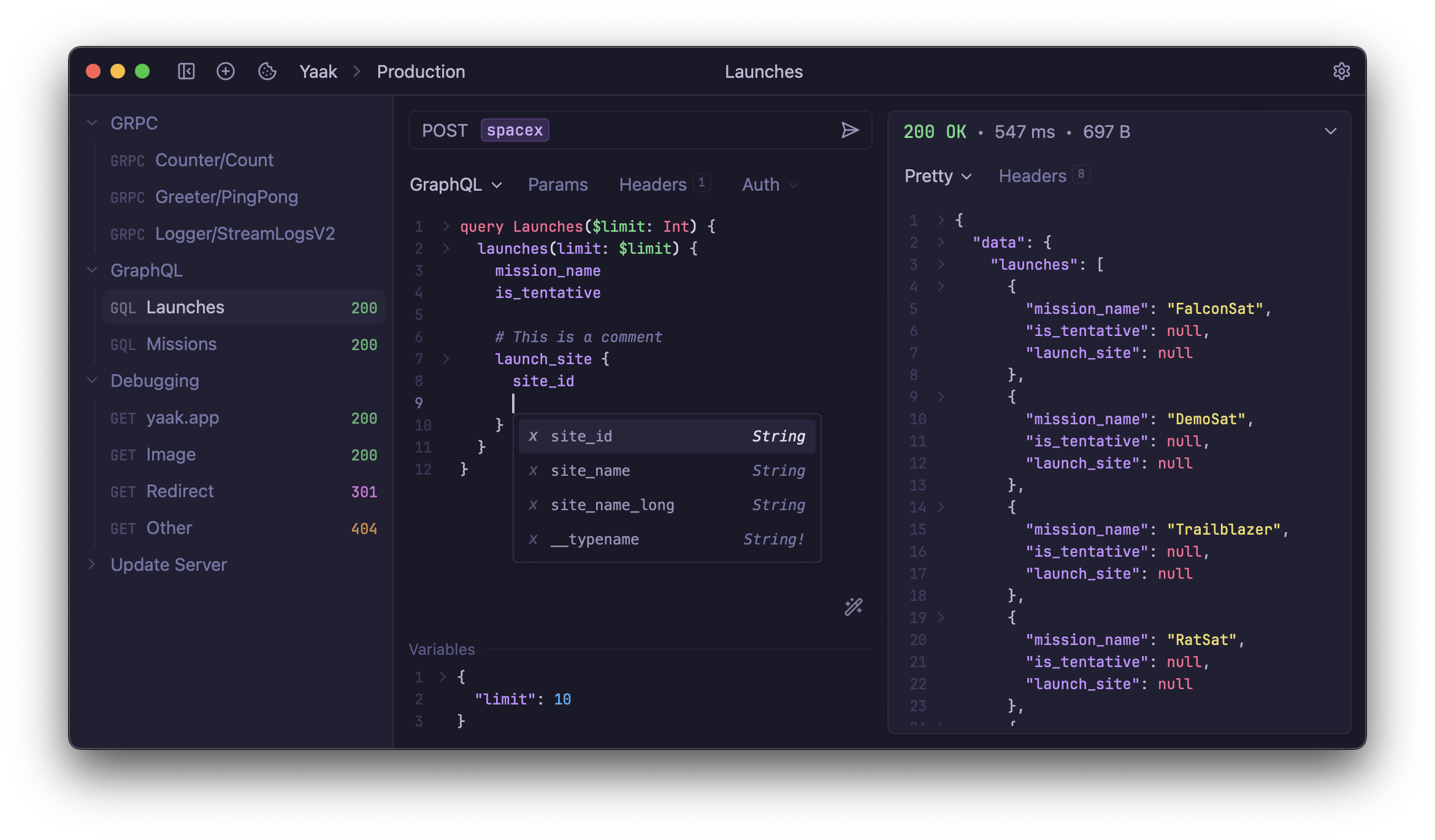
💫 Yaak ➟ Desktop API Client 💫
A fast, privacy-first API client for REST, GraphQL, SSE, WebSocket, and gRPC – built with Tauri, Rust, and React.
Development is funded by community-purchased licenses. You can also become a sponsor to have your logo appear below. 💖















Features
Yaak is an offline-first API client designed to stay out of your way while giving you everything you need when you need it. Built with Tauri, Rust, and React, it’s fast, lightweight, and private. No telemetry, no VC funding, and no cloud lock-in.
🌐 Work with any API
- Import collections from Postman, Insomnia, OpenAPI, Swagger, or Curl.
- Send requests via REST, GraphQL, gRPC, WebSocket, or Server-Sent Events.
- Filter and inspect responses with JSONPath or XPath.
🔐 Stay secure
- Use OAuth 2.0, JWT, Basic Auth, or custom plugins for authentication.
- Secure sensitive values with encrypted secrets.
- Store secrets in your OS keychain.
☁️ Organize & collaborate
- Group requests into workspaces and nested folders.
- Use environment variables to switch between dev, staging, and prod.
- Mirror workspaces to your filesystem for versioning in Git or syncing with Dropbox.
🧩 Extend & customize
- Insert dynamic values like UUIDs or timestamps with template tags.
- Pick from built-in themes or build your own.
- Create plugins to extend authentication, template tags, or the UI.
Contribution Policy
Important
Community PRs are currently limited to bug fixes. If your PR is not a bug fix, link the feedback item where @gschier explicitly gave you permission to work on it. See
CONTRIBUTING.mdfor policy details andDEVELOPMENT.mdfor local setup.