mirror of
https://github.com/netbox-community/netbox.git
synced 2026-02-26 02:35:12 +01:00
Child devices disappear from the list of Non-Racked Devices if new child device is created #3648
Closed
opened 2025-12-29 18:30:21 +01:00 by adam
·
10 comments
No Branch/Tag Specified
main
21524-invlaid-paths-exception
21518-cf-decimal-zero
21356-etags
feature
20787-spectacular
21477-extend-graphql-api-filters-for-cables
21331-deprecate-querystring-tag
21304-deprecate-housekeeping-command
21481-facility-id-doesnt-show-in-rack-page
21429-cable-create-add-another-does-not-carry-over-termination
21364-swagger
20442-callable-audit
feature-ip-prefix-link
20923-dcim-templates
20911-dropdown-3
fix_module_substitution
21203-q-attr-denorm
21160-filterset
21118-site
20911-dropdown-2
21102-fix-graphiql-explorer
20044-elevation-stuck-lightmode
v4.5-beta1-release
20068-import-moduletype-attrs
20766-fix-german-translation-code-literals
20378-del-script
7604-filter-modifiers-v3
circuit-swap
12318-case-insensitive-uniqueness
20637-improve-device-q-filter
20660-script-load
19724-graphql
20614-update-ruff
14884-script
02496-max-page
19720-macaddress-interface-generic-relation
19408-circuit-terminations-export-templates
20203-openapi-check
fix-19669-api-image-download
7604-filter-modifiers
19275-fixes-interface-bulk-edit
fix-17794-get_field_value_return_list
11507-show-aggregate-and-rir-on-api
9583-add_column_specific_search_field_to_tables
v4.5.3
v4.5.2
v4.5.1
v4.5.0
v4.4.10
v4.4.9
v4.5.0-beta1
v4.4.8
v4.4.7
v4.4.6
v4.4.5
v4.4.4
v4.4.3
v4.4.2
v4.4.1
v4.4.0
v4.3.7
v4.4.0-beta1
v4.3.6
v4.3.5
v4.3.4
v4.3.3
v4.3.2
v4.3.1
v4.3.0
v4.2.9
v4.3.0-beta2
v4.2.8
v4.3.0-beta1
v4.2.7
v4.2.6
v4.2.5
v4.2.4
v4.2.3
v4.2.2
v4.2.1
v4.2.0
v4.1.11
v4.1.10
v4.1.9
v4.1.8
v4.2-beta1
v4.1.7
v4.1.6
v4.1.5
v4.1.4
v4.1.3
v4.1.2
v4.1.1
v4.1.0
v4.0.11
v4.0.10
v4.0.9
v4.1-beta1
v4.0.8
v4.0.7
v4.0.6
v4.0.5
v4.0.3
v4.0.2
v4.0.1
v4.0.0
v3.7.8
v3.7.7
v4.0-beta2
v3.7.6
v3.7.5
v4.0-beta1
v3.7.4
v3.7.3
v3.7.2
v3.7.1
v3.7.0
v3.6.9
v3.6.8
v3.6.7
v3.7-beta1
v3.6.6
v3.6.5
v3.6.4
v3.6.3
v3.6.2
v3.6.1
v3.6.0
v3.5.9
v3.6-beta2
v3.5.8
v3.6-beta1
v3.5.7
v3.5.6
v3.5.5
v3.5.4
v3.5.3
v3.5.2
v3.5.1
v3.5.0
v3.4.10
v3.4.9
v3.5-beta2
v3.4.8
v3.5-beta1
v3.4.7
v3.4.6
v3.4.5
v3.4.4
v3.4.3
v3.4.2
v3.4.1
v3.4.0
v3.3.10
v3.3.9
v3.4-beta1
v3.3.8
v3.3.7
v3.3.6
v3.3.5
v3.3.4
v3.3.3
v3.3.2
v3.3.1
v3.3.0
v3.2.9
v3.2.8
v3.3-beta2
v3.2.7
v3.3-beta1
v3.2.6
v3.2.5
v3.2.4
v3.2.3
v3.2.2
v3.2.1
v3.2.0
v3.1.11
v3.1.10
v3.2-beta2
v3.1.9
v3.2-beta1
v3.1.8
v3.1.7
v3.1.6
v3.1.5
v3.1.4
v3.1.3
v3.1.2
v3.1.1
v3.1.0
v3.0.12
v3.0.11
v3.0.10
v3.1-beta1
v3.0.9
v3.0.8
v3.0.7
v3.0.6
v3.0.5
v3.0.4
v3.0.3
v3.0.2
v3.0.1
v3.0.0
v2.11.12
v3.0-beta2
v2.11.11
v2.11.10
v3.0-beta1
v2.11.9
v2.11.8
v2.11.7
v2.11.6
v2.11.5
v2.11.4
v2.11.3
v2.11.2
v2.11.1
v2.11.0
v2.10.10
v2.10.9
v2.11-beta1
v2.10.8
v2.10.7
v2.10.6
v2.10.5
v2.10.4
v2.10.3
v2.10.2
v2.10.1
v2.10.0
v2.9.11
v2.10-beta2
v2.9.10
v2.10-beta1
v2.9.9
v2.9.8
v2.9.7
v2.9.6
v2.9.5
v2.9.4
v2.9.3
v2.9.2
v2.9.1
v2.9.0
v2.9-beta2
v2.8.9
v2.9-beta1
v2.8.8
v2.8.7
v2.8.6
v2.8.5
v2.8.4
v2.8.3
v2.8.2
v2.8.1
v2.8.0
v2.7.12
v2.7.11
v2.7.10
v2.7.9
v2.7.8
v2.7.7
v2.7.6
v2.7.5
v2.7.4
v2.7.3
v2.7.2
v2.7.1
v2.7.0
v2.6.12
v2.6.11
v2.6.10
v2.6.9
v2.7-beta1
Solcon-2020-01-06
v2.6.8
v2.6.7
v2.6.6
v2.6.5
v2.6.4
v2.6.3
v2.6.2
v2.6.1
v2.6.0
v2.5.13
v2.5.12
v2.6-beta1
v2.5.11
v2.5.10
v2.5.9
v2.5.8
v2.5.7
v2.5.6
v2.5.5
v2.5.4
v2.5.3
v2.5.2
v2.5.1
v2.5.0
v2.4.9
v2.5-beta2
v2.4.8
v2.5-beta1
v2.4.7
v2.4.6
v2.4.5
v2.4.4
v2.4.3
v2.4.2
v2.4.1
v2.4.0
v2.3.7
v2.4-beta1
v2.3.6
v2.3.5
v2.3.4
v2.3.3
v2.3.2
v2.3.1
v2.3.0
v2.2.10
v2.3-beta2
v2.2.9
v2.3-beta1
v2.2.8
v2.2.7
v2.2.6
v2.2.5
v2.2.4
v2.2.3
v2.2.2
v2.2.1
v2.2.0
v2.1.6
v2.2-beta2
v2.1.5
v2.2-beta1
v2.1.4
v2.1.3
v2.1.2
v2.1.1
v2.1.0
v2.0.10
v2.1-beta1
v2.0.9
v2.0.8
v2.0.7
v2.0.6
v2.0.5
v2.0.4
v2.0.3
v2.0.2
v2.0.1
v2.0.0
v2.0-beta3
v1.9.6
v1.9.5
v2.0-beta2
v1.9.4-r1
v1.9.3
v2.0-beta1
v1.9.2
v1.9.1
v1.9.0-r1
v1.8.4
v1.8.3
v1.8.2
v1.8.1
v1.8.0
v1.7.3
v1.7.2-r1
v1.7.1
v1.7.0
v1.6.3
v1.6.2-r1
v1.6.1-r1
1.6.1
v1.6.0
v1.5.2
v1.5.1
v1.5.0
v1.4.2
v1.4.1
v1.4.0
v1.3.2
v1.3.1
v1.3.0
v1.2.2
v1.2.1
v1.2.0
v1.1.0
v1.0.7-r1
v1.0.7
v1.0.6
v1.0.5
v1.0.4
v1.0.3-r1
v1.0.3
1.0.0
Labels
Clear labels
beta
breaking change
complexity: high
complexity: low
complexity: medium
needs milestone
netbox
pending closure
plugin candidate
pull-request
severity: high
severity: low
severity: medium
status: accepted
status: backlog
status: blocked
status: duplicate
status: needs owner
status: needs triage
status: revisions needed
status: under review
topic: GraphQL
topic: Internationalization
topic: OpenAPI
topic: UI/UX
topic: cabling
topic: event rules
topic: htmx navigation
topic: industrialization
topic: migrations
topic: plugins
topic: scripts
topic: templating
topic: testing
type: bug
type: deprecation
type: documentation
type: feature
type: housekeeping
type: translation
Mirrored from GitHub Pull Request
Milestone
No items
No Milestone
Projects
Clear projects
No project

Notifications
Due Date
No due date set.
Dependencies
No dependencies set.
Reference: starred/netbox#3648
Reference in New Issue
Block a user
Blocking a user prevents them from interacting with repositories, such as opening or commenting on pull requests or issues. Learn more about blocking a user.
Delete Branch "%!s()"
Deleting a branch is permanent. Although the deleted branch may continue to exist for a short time before it actually gets removed, it CANNOT be undone in most cases. Continue?
Originally created by @jones-g on GitHub (May 7, 2020).
Originally assigned to: @jeremystretch on GitHub.
Environment
Steps to Reproduce
Expected Behavior
Expected to see both child devices in "Non-Racked Devices" on rack at step 6. The first with parent set and the second without parent set.
Observed Behavior
At step 4 and 5 the first child device is shown in the "Non-Racked Devices" as expected. At step 4 with no parent and at step 5 with the parent device set. Upon creating the second child device in step 6 - if the first child device is already placed inside a device bay it disappears from the list of "Non-Racked Devices" and only the second child device is show.
Confirmed on netboxdemo.com running version 2.8.1 as well.
@DanSheps commented on GitHub (May 7, 2020):
This is not correct. After step 5, the device is "racked" in the bay of the first device, hence why it does not show in the "Non-Racked" devices.
Just to confirm.
If so, this looks like a cache invalidation problem as removing the second child does not replace the blade back in the unrack section. Additionally, editing the blade will also remove it.
@jones-g commented on GitHub (May 11, 2020):
Cache invalidation problem sounds very reasonable.
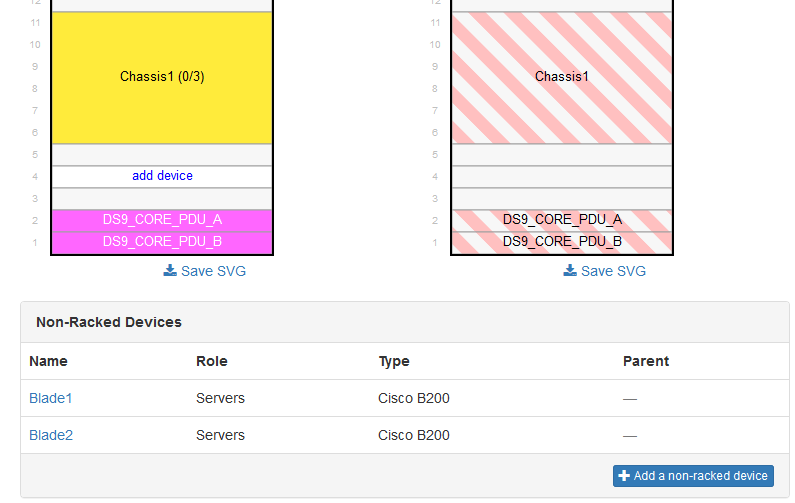
Indeed the process is correct. I have captured some screenshots to demonstrate. If I in step 4 create two child devices (Blade1 and Blade2) and rack them as unracked devices they show up as expected:
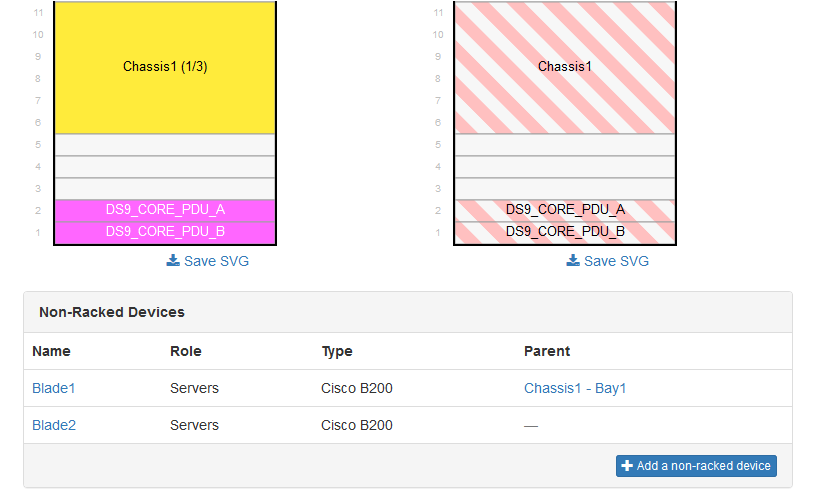
If I then place Blade1 in device bay 1 of Chassis1 I get this:
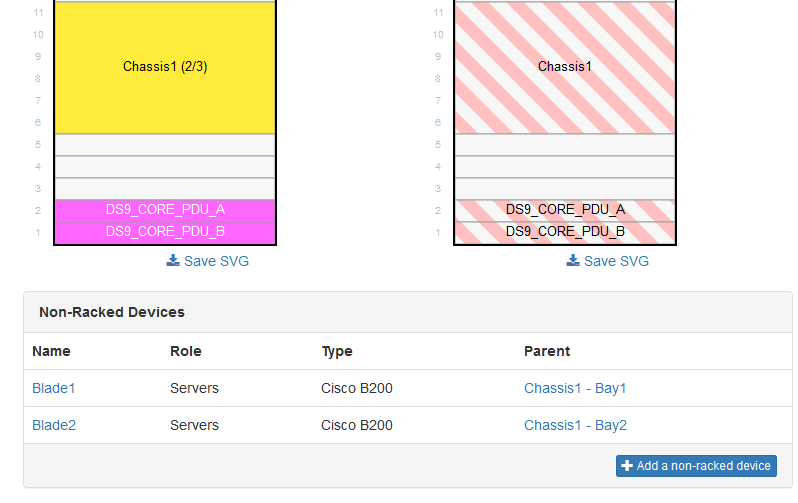
If I then place Blade2 in device bay 2 of Chassis 1 I get this:
But as soon as I add a new unracked child device, Blade3, to the rack - both Blade 1 and 2 disappear:
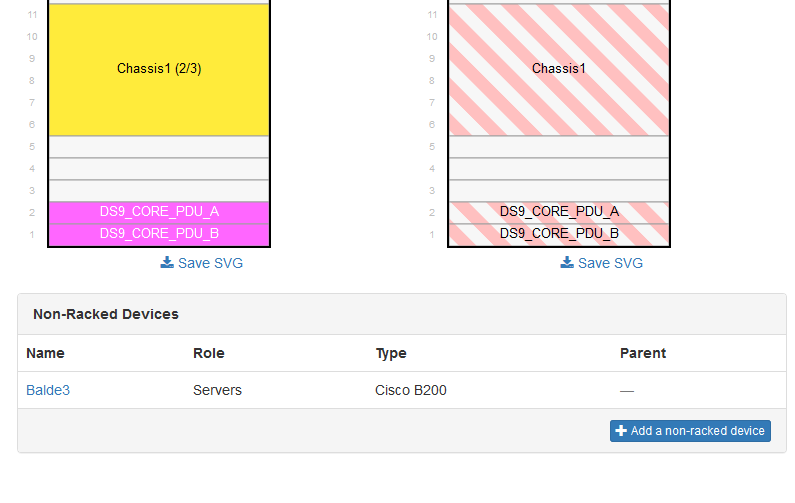
Which behaviour is the correct one I am not certain of. From your comment the fact that Blade 1 and 2 remain in unracked devices seems to be the incorrect behaviour.
Let me know if you need more information.
@lampwins commented on GitHub (May 15, 2020):
@jeremystretch I am a little confused about the intended behavior here. As I recall once a child device is installed in a racked parent, that child is also considered racked. However, the non-racked devices table includes a parent column. I assume this was intended to cover a case in which a parent is not racked and thus the children should show up in the table too? If that is the case, I think we have a separate bug, because the existing query would not allow the inclusion of the child devices in such a case because of
parent_bay__isnull=True:@lampwins commented on GitHub (May 19, 2020):
As for the actual caching issue here, it appears to be related to the use of a related name (
parent_bay) with anisnulloption. I have raised #353 upstream.@DanSheps commented on GitHub (May 20, 2020):
Blocked: Suor/django-cacheops#353
@DanSheps commented on GitHub (May 20, 2020):
As far as what @lampwins mentions about the Parent column, I think once a child is put in a bay, I think we should consider it "racked", at least to the parent, so we might want to ditch the Parent column. If no one has objections, I am going to open a issue for that one
@DanSheps commented on GitHub (Jun 22, 2020):
Looks like this got fixed upstream, we will just need to wait for the next release of cacheops
@jeremystretch commented on GitHub (Jul 16, 2020):
I ended up just cleaning up the table to include both 0U and child devices. Did away with the
parent_bay__isnullfilter on the queryset so that both types of device are included.@willbuckner commented on GitHub (Oct 1, 2020):
On v2.8.9, even after wiping Redis to clear the cache, I see all of my child devices (whose parents are racked) showing up in Unracked Devices. Looking at the commit for this issue,
9d243103f4, it seems this is now intended behavior, but it's very not ideal for my use case. A 0U PDU is an unracked device, but a blade server is not. It's racked, inside the parent device. Now I can't distinguish devices which are not yet installed or are missing necessary rack elevation data, from devices which are correctly installed inside a racked parent device.@DanSheps commented on GitHub (Oct 2, 2020):
If you think the other way is better, it may be best to open a FR for it instead of posting in here.
Make sure you provide ample justification however.