mirror of
https://github.com/advplyr/audiobookshelf.git
synced 2026-09-05 17:37:24 +02:00
What is the reason for hls? #172
Closed
opened 2026-04-24 23:00:03 +02:00 by adam
·
9 comments
No Branch/Tag Specified
master
auth_sessions_enhancements
account_sessions_table
logout_all_devices
pw_change_invalidates_sessions
book_tags_genres_dedupe
episode_download_fallback
Issue-4540-SortBy-StartedDate-and-FinishedDate
episode_meta_tagging
fix_authorize_race_condition
redirect_transcode_requests
progress_updated_sort
fix_ereader_socket_event
fix_change_empty_root_password
fix_podcast_session_track_index
fix_set_token
session_modal_user
localize_durations
fix_oidc_create_user
jwt_auth_refactor
fix_scanner_deleting_single_file_books
fix_mediaprogress_updatedat_2
experimental_next_client
podcast_episode_duration
episode-timestamps-clickable
book_author_secondary_sort_title
podcast_useragents
pathexists_user_access
fix_pathexists_join
book_author_secondary_sort
clean_duplicate_mediaprogress
sanitize_html_description
trix_prevent_attachments
check_path_api_fix
fix_mediaprogress_updatedat
increase_express_json_limit
fix_dockerfile_nunicode
search_episodes
audiobook_tools_update
episode_secondary_sorts
hls_stream_url_update
new_session_track_endpoint
audiobook_tools_enhancements
watcher_rescans_update
player_track_tooltip
fix_exclude_prefixes_crash
socket_item_events
fix_podcast_episode_scanner_promise
new_stats_controller
count_cache_for_userpermissions
parsing-opf-v3
validate_migration_files
fix-quick-match-all-crash
fix-chapter-end-sleep-timer
stringify_sequelize_query
remove-col-ambiguity
fix_next_prev_edit_description
details_trim_whitespace
fix_content_url_basepath
fix_logger_fatal
progress_bar_visibility
batch-edit-populate-map-details
feed_generator_updates
bookmark-modal-updates
migrate-library-item-in-scanner
migrate-new-library-items
migrate-podcasts-new-library-item-2
migrate-podcasts-new-library-item
fix-remove-episode-from-playlist
playback-session-use-new-library-item
refactor-library-item
fix-heatmap-caption
feed-episodes-upsert
share-media-player-media-session-api
remove-old-playlist
remove_old_collection_object
plugin-implementation-demo
feed_migration
refactor-feeds-from-item
fix_remove_authors_no_books
v2.17.3-fk-constraints-migration
migrations-first-upgrade
sqlite_2
feature/nuxt-target-server
waveform
sqlite
playlists
video
v2.36.0
v2.35.1
v2.35.0
v2.34.0
v2.33.2
v2.33.1
v2.33.0
v2.32.1
v2.32.0
v2.31.0
v2.30.0
v2.29.0
v2.28.0
v2.27.0
v2.26.3
v2.26.2
v2.26.1
v2.26.0
v2.25.1
v2.25.0
v2.24.0
v2.23.0
v2.22.0
v2.21.0
v2.20.0
v2.19.5
v2.19.4
v2.19.3
v2.19.2
v2.19.1
v2.19.0
v2.18.1
v2.18.0
v2.17.7
v2.17.6
v2.17.5
v2.17.4
v2.17.3
v2.17.2
v2.17.1
v2.17.0
v2.16.2
v2.16.1
v2.16.0
v2.15.1
v2.15.0
v2.14.0
v2.13.4
v2.13.3
v2.13.2
v2.13.1
v2.13.0
v2.12.3
v2.12.2
v2.12.1
v2.12.0
v2.11.0
v2.10.1
v2.10.0
v2.9.0
v2.8.1
v2.8.0
v2.7.2
v2.7.1
v2.7.0
v2.6.0
v2.5.0
v2.4.4
v2.4.3
v2.4.2
v2.4.1
v2.4.0
v2.3.5
v2.3.4
v2.3.3
v2.3.2
v2.3.1
v2.3.0
v2.2.23
v2.2.22
v2.2.21
v2.2.20
v2.2.19
v2.2.18
v2.2.17
v2.2.16
v2.2.15
v2.2.14
v2.2.13
v2.2.12
v2.2.11
v2.2.10
v2.2.9
v2.2.8
v2.2.7
v2.2.6
v2.2.5
v2.2.4
v2.2.3
v2.2.2
v2.2.1
v2.2.0
v2.1.5
v2.1.4
v2.1.3
v2.1.2
v2.1.1
v2.1.0
v2.0.24
v2.0.23
v2.0.22
v2.0.21
v2.0.20
v2.0.19
v2.0.18
v2.0.17
v2.0.16
v2.0.15
v2.0.14
v2.0.13
v2.0.12
v2.0.11
v2.0.10
v2.0.9
v2.0.8
v2.0.7
v2.0.6
v2.0.5
v2.0.4
v2.0.3
v2.0.2
v2.0.1
v1.7.2
v1.7.1
v1.7.0
v1.6.0
v1.5.5
v1.5.0
v1.4.11
v1.4.9
v1.4.7
v1.4.6
v1.4.4
v1.4.2
v1.4.0
v1.4.1
v1.3.4
v1.3.3
v1.3.1
v1.2.8
v1.2.6
v1.2.5
v1.2.4
v1.2.1
v1.1.15
v1.1.14
v1.1.13
v1.1.12
v1.1.11
v1.1.10
v1.1.9
v1.1.8
v1.0.0
0.9.61-beta.0
0.9.61-beta
Labels
Clear labels
authentication
backlog
bug
chapter editor
config-issue
ebooks
encoding/embedding
enhancement
help wanted
listening sessions & progress
planned
possible plugin
progress sync
pull-request
sorting/filtering/searching
unable to reproduce
upload
users & permissions
waiting
Mirrored from GitHub Pull Request
No labels
Milestone
No items
No Milestone
Projects
Clear projects
No projects
Assignees
 adam (Adam Melkus)
Clear assignees
adam (Adam Melkus)
No Assignees
Notifications
Due Date
No due date set.
Dependencies
No dependencies set.
Reference: starred/audiobookshelf#172
Reference in New Issue
Block a user
Blocking a user prevents them from interacting with repositories, such as opening or commenting on pull requests or issues. Learn more about blocking a user.
Originally created by @JKamsker on GitHub (Jan 10, 2022).
I am experimenting a bit with my audiobooks and a simple website containing just an tag and found out, that chrome on my pc and mobile are perfectly capable of streaming my audiobooks as they are, without any fancy hls encoding.
They are even able to stream currently required parts and scrubbing through the audio is also pretty smooth.
While scrubbing, the browser produces requests containing
Range: bytes=nstart-headersMy question is: Why do we need hls encoding? Can we have an option(like on youtube: original, hq, lq) to just use the original files, when we know that the user device is capable enougth to stream the files?
What i found out about hls:
Pro: It could reduce file size. That reduces transport cost & helps the device actually playing the audio.
Con: Streams need way longer than necessary to start playing and i (like most i think), only use abs in my local network, where i have got gigabit networking.
Even if you were to be connected via cell, an audiobook that's 1Gb in size with 24h playtime, could load 1h worth of data within seconds (42mb)
In addition, conversion seems to be a little bit too buggy at the moment to actually use the feature. (Playing one stream and switching to another causes the webclient to crash/not playing audio)
@advplyr commented on GitHub (Jan 10, 2022):
I think direct streaming if available is something that should be built.
Converting every audiobook to HLS was an easy way to get started, and it worked so well that I haven't felt the need to iterate on it yet. It is also necessary because you can't direct stream every audio file on every device. There are alternatives, but I find HLS easiest to work with and universally supported.
The start time for audio-only HLS transcode is fast. For me a 1GB audiobook takes about 3s to start playing. The transcode could take a minute or two to finish, but you only need a few segments to start playing.
A direct stream would still need to run an FFmpeg command if the audiobook was made up of multiple files. If an audiobook was 20 mp3's then you would concatenate them. Did you have another idea on how to direct stream multiple files?
An audiobook that is a single audio file wouldn't require anything extra.
I'm not sure what you mean here, I haven't experienced this bug. Can you provide more details?
@mx03 commented on GitHub (Jan 10, 2022):
Had the same problem serveral times. Currently i dont have 2 audiobooks i hear, but next time i make an issue.
JS Player with playlist logic. I would prefer that too, but the current solution with hls is easier to start with, like you said.
One big problem with direct streaming without hls, if you have a audiobook in one file with chapters, it trys to download the hole file even if you play only 20 minutes (with a 2gb audiobook not so great, at least if its not the intranet).
Thats the default behavior, alternative buffering the data itself would solve that problem, but then buffer seeking must developed.
@JKamsker commented on GitHub (Jan 11, 2022):
Id use the plain file where possible and only fall back to hls if necessary. Hopefully its detectable if a player can play the files or not.
Pseudo logic:
My NAS, where abs runs, isn't exactly what one would call powerful or optimized for audio processing.
My phone or pc are way better suited for smth like that.
3s is subjective. Atleast for me it was haha. Felt like an eternity while testing haha
Thing is, it loads and just doesn't stop loading when running into said bug.
You wouldn't notice it until you look at the developer shell.
Metadata + some playlist logic in js maybe? Working on a PoC, dunno if i can make it (not experienced in js)
Should be rather simple. The tricky thing would be to preload some of the upcoming tracks in advance
Can't confirm. The default player only loads what it needs. Im using the plain default nginx server in docker. Its fast and it supports ranging.
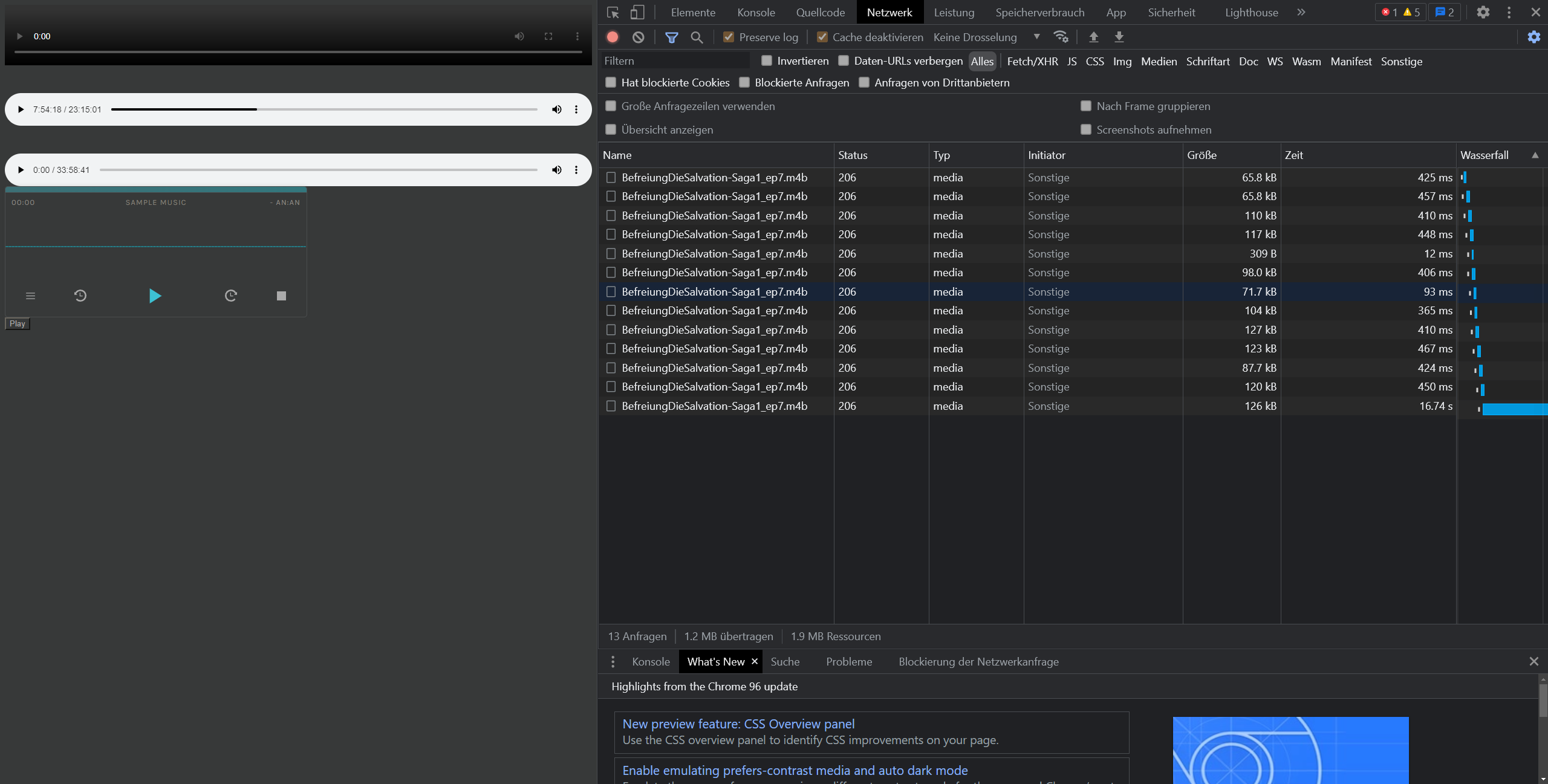
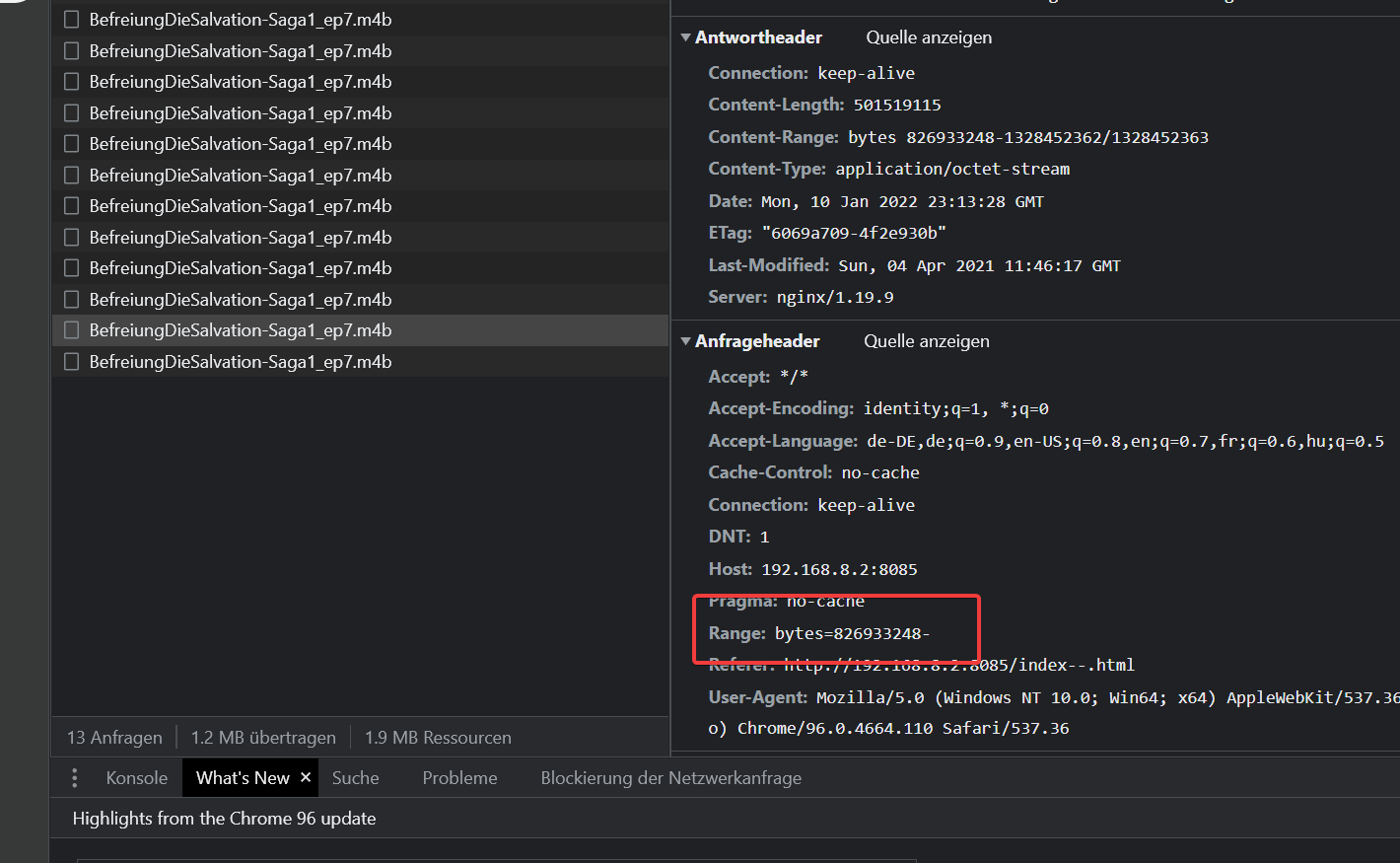
I will open another issue
@mx03 commented on GitHub (Jan 11, 2022):
If you have a 1gb Audiofile with default audio tag and you start playing it downloads the whole file and don't stop if it's 30minutes ahead.
The seeking with content range is no problem nowadays.
@JKamsker commented on GitHub (Jan 11, 2022):
What do you mean with default audio tag?
It works for me with m4a, m4b and mp3 files
@mx03 commented on GitHub (Jan 11, 2022):
Oh yes you're right i had this problem one or two years ago that it prefetch the whole file, but seems its fine now.
@JKamsker commented on GitHub (Jan 11, 2022):
Oh cool! Maybe this case could be detected beforehand?
@advplyr commented on GitHub (Mar 6, 2022):
In v1.7.2 with experimental features on the web app will direct play audiobooks.
If direct play fails it should gracefully fall back to hls stream. So far my tests are working well, next it will be moved to the mobile app.
@advplyr commented on GitHub (Apr 24, 2022):
Direct play is now fully supported in the web app and the android app.
Will soon be implemented for iOS.